
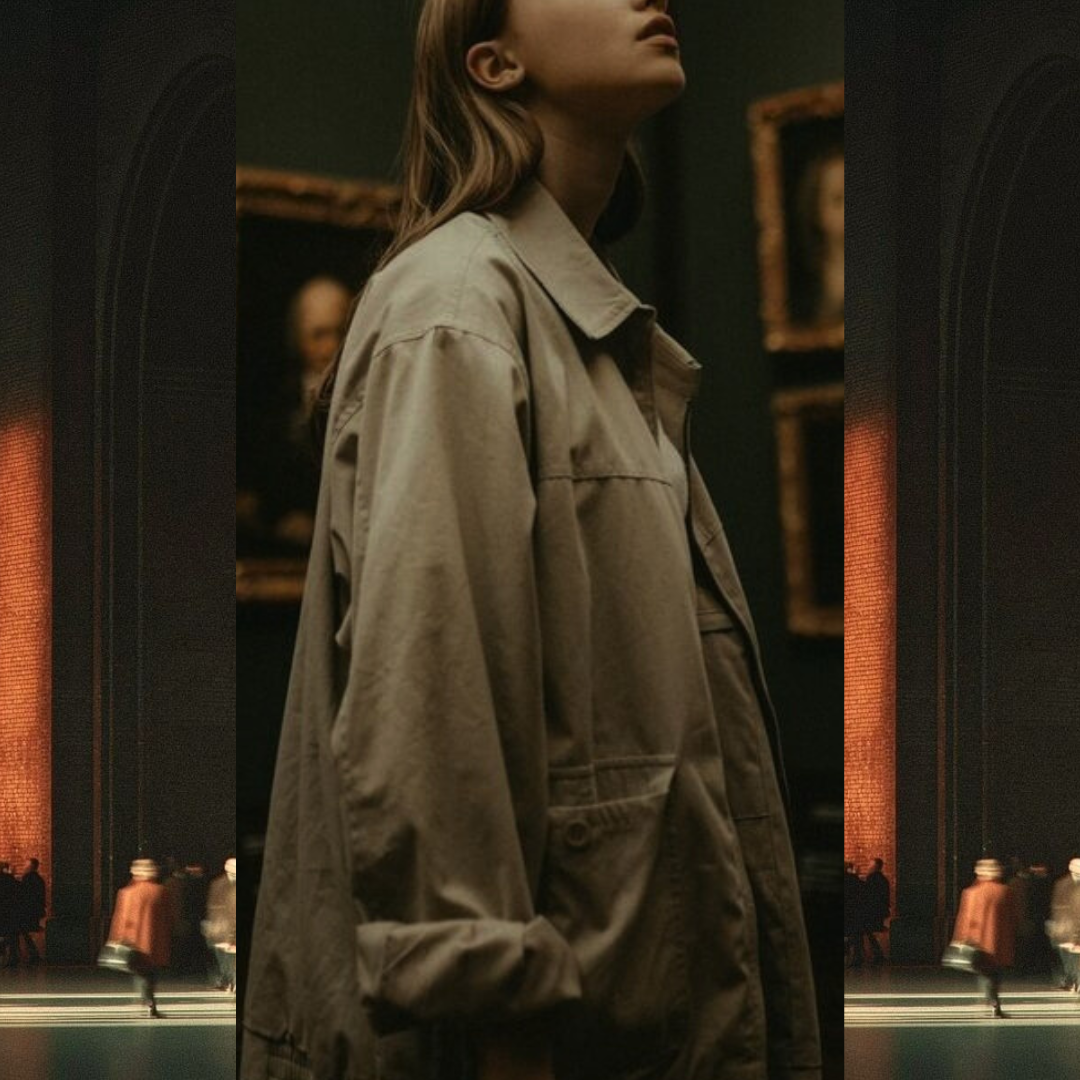
So that people in a museum are more than spectators
Even the most impressive exhibits or the richest history can lose their impact if the visitor journey through a space feels monotonous.
When people simply stand, read information panels, and listen to explanations, their brains quickly shift into a passive observer mode. After a while, attention drops, information becomes tiring, and the visitor experience turns superficial.
Today’s visitors no longer want to just observe.
They want to participate.
Let’s create extraordinary experiences together!
01
What is an experience audit
An experience audit means walking the space through a visitor’s eyes.
During the process, we evaluate:
- how people move through the space
- vietas, kur jam pabosta
- what you have but do not show
- where they could do something themselves
We look for where and why people lose interest, and what to change in the space so they want to keep going.
02
How we change the visitor’s path
When we design solutions we change how your story is experienced.
We work from how people actually behave in a space, and lay out the visitor’s path so that it naturally produces:
- curiosity
- the joy of discovery
- a light sense of competition
Then visitors no longer have to make themselves pay attention — they get drawn in and lose track of time.
03
Tools that change visitor behavior
After the audit it is clear which few changes can completely change how the space feels.
04
Discovery mechanics
Instead of presenting information directly, we create conditions for visitors to discover it themselves.
When content becomes a mystery or a challenge, passive reading turns into active exploration.
05
Reworking space and rhythm
A uniform visitor journey quickly dulls attention.
With sound, light, movement and changes in the space we create surprises that wake attention up again.
06
Lankytojas renkasi pats
People remember experiences longer when they are able to make choices.
So we create situations where visitors can choose where to go and what to do next.
07
Kaip dirbame kartu
Dirbame dviem etapais.
08
Stage 1 — Experience audit and concept
We carry out an in-depth analysis of your space from the visitor’s perspective and identify the main points where attention drops.
After the audit we hand over a clear plan with reasoning and several different routes for changing the visitor experience.
09
Stage 2 — Implementation
Once the strategy is approved, we assemble the right team of specialists, including:
- technology developers
- sound and lighting engineers
- designers
Invoke Live veikia kaip projekto generalinis koordinatorius ir užtikrina, kad sprendimai būtų kūrybiški ir ilgaamžiai.
10
Invoke Live experience
Over more than 18 years, the Invoke Live team has developed a range of interactive projects — from psychological action spaces to technology-driven experience platforms.
This experience allows us to turn complex ideas into intuitive, fully functioning visitor experiences.
11
The first step — diagnosing your space
Every collaboration begins with a short strategic conversation.
The process:
- Questionnaire — you provide information about visitor flow, visit duration, and the main challenges
- Strategic call — we discuss the audit potential and the value it could create
- On-site audit — if we see clear potential, we carry out a detailed analysis of the space